Source SMD LED Chips for Smart Home Lighting and Display
Find 30 verified SMD LED Chips from suppliers in China with options for red and blue emitting colors. Compare specifications including power ratings, beam angles, and lifespans to select the right components for smart home, advertising, and guideline lighting applications.
Key considerations
Products List


$0.02 - $0.04
MOQ: 10 Pieces


Comprehensive Sourcing Guide
Strategic Sourcing Guide for SMD LED Chips
Navigating the global market for Surface Mount Device (SMD) LED chips requires a disciplined approach that balances technical performance, regulatory compliance, and supply chain reliability. For procurement professionals, the core keyword "SMD LED Chips" represents a vast category where specifications vary significantly based on application, material composition, and intended operating environment. This guide synthesizes observed market data and verified technical attributes to provide a framework for evaluating potential suppliers and products without relying on unverified claims or specific vendor recommendations.
Technical Specifications and Material Composition
The foundation of any successful procurement strategy lies in a precise understanding of the technical specifications that define the component's performance. SMD LED Chips are not monolithic; they are distinguished by their physical dimensions, semiconductor materials, and electrical characteristics. Market observations indicate a diversity in chip materials, with specific listings citing Aluminum Gallium Indium Phosphide (AlGaInP) and Indium Gallium Nitride (InGaN) as primary semiconductor compounds. The choice of material directly influences the emitted wavelength and color, which are critical for applications ranging from smart home indicators to high-intensity lighting.
Electrical parameters are equally vital. Procurement teams must verify the power rating, which in observed datasets ranges from 0.2W to 3W, with 1W being a common standard for general illumination. The input voltage typically falls within the 1.8V to 2.4V range, while the forward current is often standardized at 700mA for specific high-output models. Luminous flux, a measure of total visible light emitted, shows observed ranges between 20 and 50 lumens for certain red chip variants. Beam angle is another critical optical specification, with 120° being a documented standard for wide-angle distribution, ensuring uniform light spread in applications like guideline lights or display backlights.
Physical dimensions and packaging standards further differentiate products. While standard sizes like 3030 and 3535 are prevalent, specific model numbers such as GT-3030R6-1090-G40M or GS-2835DR-660 indicate unique form factors. Packaging types vary from reel packages, often containing 4000 to 24000 pieces per roll, to box and carton configurations. Buyers must ensure that the physical standard, such as chip sizes of 28x28 mm or specific thicknesses like 1.5mm, aligns with their PCB design and automated assembly capabilities.
Compliance and Certification Verification
In the B2B electronics sector, regulatory compliance is not merely a formality but a prerequisite for market access and liability protection. Sourcing guides must emphasize the verification of certifications rather than assuming their presence. Observed data highlights a complex landscape of standards, including CE, FCC, RoHS, UL, EMC, GS, KEMA, IMQ, CCC, and ISO. The presence of multiple certifications, such as the combination of FCC, UL, RoHS, and CE, suggests a product designed for stringent international markets, particularly North America and Europe.
However, buyers must exercise caution. The existence of a certification claim does not guarantee that every unit in a production batch meets the standard. For instance, while some listings cite Energy Star compliance alongside EMC and FCC, others may only list basic CE and RoHS marks. The verification process should involve requesting valid, up-to-date test reports from the supplier that correspond to the specific model number being purchased. Certifications like CCC (China Compulsory Certification) are essential for products entering the Chinese market, while UL and GS are critical for safety in Western jurisdictions.
Furthermore, environmental compliance regarding hazardous substances is non-negotiable. RoHS (Restriction of Hazardous Substances) is frequently cited, but buyers should confirm the specific directive version (e.g., RoHS 2 or 3) to ensure compatibility with current regulations. The absence of a specific certification in a product listing should not be interpreted as a failure, but rather as a signal to request documentation before proceeding with an order.
Cost Drivers and Pricing Dynamics
Understanding the cost structure of SMD LED Chips is essential for budgeting and negotiation. The observed price range in the market spans from $0 to $45.3 USD, a wide variance that reflects differences in power rating, brand reputation, and order volume. Several factors drive these costs. First, the semiconductor material plays a significant role; chips utilizing AlGaInP for red wavelengths may have different cost structures compared to InGaN variants used for blue or green emissions. Second, the brand of the LED chip, such as Epistar, can influence pricing due to perceived reliability and consistency in binning.
Order volume is perhaps the most significant variable. The Minimum Order Quantity (MOQ) observed in the market ranges from 0 to 1,000,000 units. High-volume procurement often secures a lower unit price, but the initial capital outlay is substantial. Conversely, suppliers accepting small orders may charge a premium to cover setup and handling costs. Buyers should analyze their total cost of ownership, including the cost of rework if low-quality chips lead to assembly failures, rather than focusing solely on the unit price.
Additional cost drivers include packaging requirements and logistics. Reel packaging is standard for automated pick-and-place machines, but custom packaging or specific carton configurations may incur extra fees. The origin of the product, primarily noted as China or Shenzhen, also impacts shipping costs and lead times. Buyers must weigh the trade-off between lower unit costs from high-volume suppliers and the flexibility of lower MOQs from smaller vendors.
Typical Applications and Performance Requirements
The versatility of SMD LED Chips allows them to serve a wide array of applications, each demanding specific performance attributes. Smart home devices are a prominent application, where low-power, high-efficiency chips are required for status indicators and ambient lighting. In this context, the 1W power rating and 80,000-hour life expectancy are key selling points, ensuring long-term reliability with minimal maintenance.
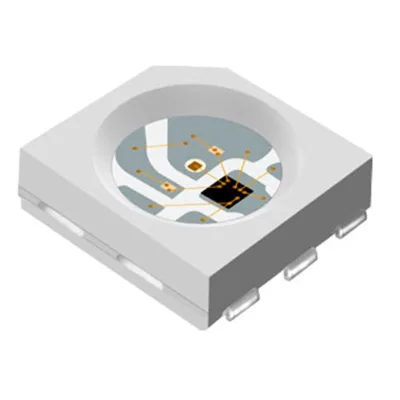
Industrial and commercial lighting applications, such as advertisement lights and guideline lights, often require higher luminous intensity and specific color temperatures. The observed usage categories include display lighting, where color accuracy and consistency are paramount. For these applications, the beam angle of 120° and the specific wavelength ranges (e.g., 640-660nm for red) are critical for achieving the desired visual effect. The formation of the chip, such as gold thread connections, is another factor that influences performance in high-vibration or high-temperature environments.
Display applications also demand high reliability. The life expectancy of 50,000 to 80,000 hours ensures that the product remains functional over the lifespan of the device. Buyers must match the chip's specifications to the application's environmental constraints. For instance, a chip with an IP rating suitable for indoor use may not be appropriate for outdoor guideline lights without additional housing or protection.
Supplier Evaluation and Quality Assurance
Evaluating a supplier requires a multi-dimensional approach that goes beyond the initial product listing. The presence of certifications like CE and RoHS is a good starting point, but the supplier's ability to maintain quality control throughout the production process is paramount. Buyers should assess the supplier's track record in delivering consistent binning for luminous flux and wavelength. Variations in these parameters can lead to visible color shifts in the final product, which is unacceptable for high-end applications.
Quality control measures should include pre-shipment inspections and the availability of test data. While specific test results are not provided in general listings, buyers should request data on forward voltage, forward current, and luminous intensity for the specific batch being ordered. The standard of "Standard" luminous intensity mentioned in some listings is vague; precise numerical ranges should be defined in the purchase agreement.
Furthermore, the supplier's ability to handle customization is a significant differentiator. The availability of customization options allows buyers to tailor the product to specific design requirements, such as unique packaging or modified electrical characteristics. However, customization often introduces complexity and potential for error. Buyers must ensure that the supplier has the technical expertise to manage these customizations without compromising the core quality of the chip.
Long-Term Procurement Considerations
Sourcing SMD LED Chips is not a one-time transaction but a long-term partnership that requires strategic planning. The life expectancy of the chips, ranging from 50,000 to 80,000 hours, implies that the procurement strategy must account for the entire lifecycle of the product. This includes planning for potential obsolescence and ensuring that the supplier can provide consistent supply over several years.
Lead times and inventory management are also critical. While specific lead times are not universally standardized, the observed MOQ ranges suggest that high-volume orders may require significant lead time for production and shipping. Buyers should develop a robust inventory strategy to mitigate the risk of stockouts, especially for critical components used in smart home or industrial applications.
Finally, the relationship with the supplier should be built on transparency and mutual trust. Open communication regarding technical specifications, compliance status, and potential supply chain disruptions will help both parties navigate the complexities of the global electronics market. By focusing on these long-term considerations, buyers can secure a reliable supply of high-quality SMD LED Chips that meet their technical and business requirements.
Summary of Key Technical Parameters
To assist in the rapid evaluation of potential products, the following table summarizes the key technical parameters observed in the market data. This comparison highlights the diversity of specifications available and serves as a checklist for procurement teams.
| Parameter | Observed Values / Standards | Application Relevance |
|---|---|---|
| Chip Material | AlGaInP, InGaN | Determines color and efficiency |
| Power Rating | 0.2W, 0.5W, 1W, 3W | Defines heat dissipation needs |
| Input Voltage | 1.8V - 2.4V | Circuit design compatibility |
| Current | 700mA | Driver selection |
| Luminous Flux | 20-50lm | Brightness requirements |
| Beam Angle | 120° | Light distribution pattern |
| Wavelength | 640-660nm (Red), 680-700nm | Color accuracy |
| Life Expectancy | 50,000h - 80,000h | Product lifespan |
| Certifications | CE, FCC, RoHS, UL, CCC, ISO | Regulatory compliance |
| Packaging | Reel (4000-24000 pcs), Box | Assembly line compatibility |
| Origin | China, Shenzhen | Logistics and tariff considerations |
This guide provides a structured approach to sourcing SMD LED Chips, emphasizing the importance of technical verification, compliance checks, and strategic supplier evaluation. By adhering to these principles, procurement professionals can mitigate risks and ensure the successful integration of high-quality components into their products.
FAQs
What certifications do SMD LED Chips typically have?
SMD LED Chips often carry certifications like CE, FCC, RoHS, UL, and CCC. Some listings also include KEMA, IMQ, EMC, GS, and ISO marks to ensure compliance with international safety and environmental standards for various markets.
Which chip materials are used for red and blue LEDs?
Red LED chips frequently use AlGaInP material, while blue variants often utilize InGaN. These materials determine the specific wavelength and color output, such as 640-660nm for red or blue emissions in 3030 and 3535 packages.
How long is the typical lifespan of these LED chips?
The typical lifespan ranges from 50,000 to 80,000 hours depending on the model. This durability ensures reliability for applications like smart home devices and industrial lighting without frequent replacement.
Can I find SMD LED Chips with customization options?
Yes, customization is available for many SMD LED chip products. Buyers can request specific packaging, electrical characteristics, or branding to align with their unique design requirements and assembly processes.
What is the standard packaging type for these chips?
Standard packaging includes reel packages containing 4,000 to 24,000 pieces per roll. Some products also come in box or carton configurations to suit different automated assembly line needs.
Which power ratings are common for SMD LED Chips?
Common power ratings include 0.2W, 0.5W, 1W, and 3W. The 1W rating is particularly standard for general illumination, with input voltages typically falling between 1.8V and 2.4V.
Where are these SMD LED Chips primarily manufactured?
These chips are primarily manufactured in China, with specific origins noted in Shenzhen. This location influences logistics and lead times for global procurement teams sourcing these components.